

nnamu AI
Founding designer. I rebuilt a legacy negotiation platform from scratch and launched v1 solo in six months.

Rebuilding
negotiation.
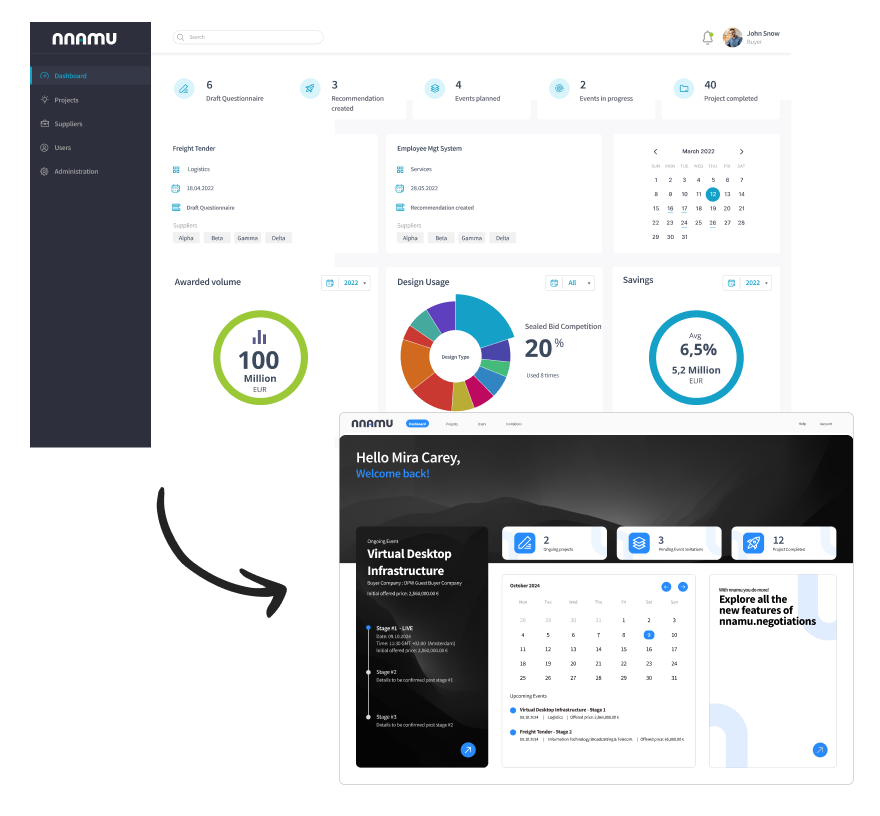
nnamu's negotiation platform ran on a dated, 90s-style legacy system. It had to keep up with the business and work for two audiences: paying customers and the suppliers they negotiate with.
The problem
nnamu is a negotiation platform for procurement. When I joined as one of the first five employees, the product was a legacy system that needed significant improvements to meet evolving business needs, and it felt like software from the 90s. The new application had to carry over the demands the old platform already met, and work for both paying customers and the suppliers they negotiate with.
Constraints
- A team of one on design. I was the sole designer for most of the project, working with three engineers and six backend developers.
- Nothing to start from, a lot to honour. I was building a new application from the ground up, but it had to meet the pre-existing demands placed on the negotiation platform.
- Two audiences. Buyers and suppliers both had to be served, with one consistent experience.
- B2B with consumer expectations. The goal was a modern, B2C-quality experience inside an enterprise environment.
Decision 1: Make a B2B tool feel like a modern product
The legacy interface was fully redesigned with improved navigation, streamlined workflows and a cohesive design system. The aim was a smoother experience with fewer clicks between a person and their goal.
Decision 2: One experience for buyers and suppliers
I developed a research-backed design system and used it to create universal flows and screens that serve both paying customers and suppliers. User feedback and testing shaped the system, so the experience stays consistent whoever is using it.

Decision 3: AI that assists rather than replaces
nnamu negotiates with game theory and AI. I designed the product so the AI assists rather than replaces the user, and introduced elements that boost engagement while reducing the number of clicks needed to reach a goal.
Outcome
- I launched v1 solo in six months.
- The platform has successfully completed 600+ negotiations.
- The team's sprint velocity and goals were consistently exceeded.
- nnamu is a game-theory based AI agent that increases value creation in procurement by over 60%. The platform I designed is how customers and suppliers use it.
- nnamu joined Beroe in April 2025. I now lead design for it alongside Beroe's other products.
Area of work
Walking into the studio, I took on the responsibility of owning the entire project, which meant there was a lot to manage and execute from the ground up.

The NBU's
Intensive research was conducted to understand the Next Billion Users, the primary customers of the application.

Psychology of NBU's
Psychology focused research on identifying key aspects that could be implemented to boost engagement and retention.

Engaging visuals
To make the experience more engaging and relatable, we incorporated photos familiar to the users, creating a sense of comfort.

Exciting experience
Additionally, interactive games were introduced to boost user engagement, encouraging more interaction with the app.
Retention
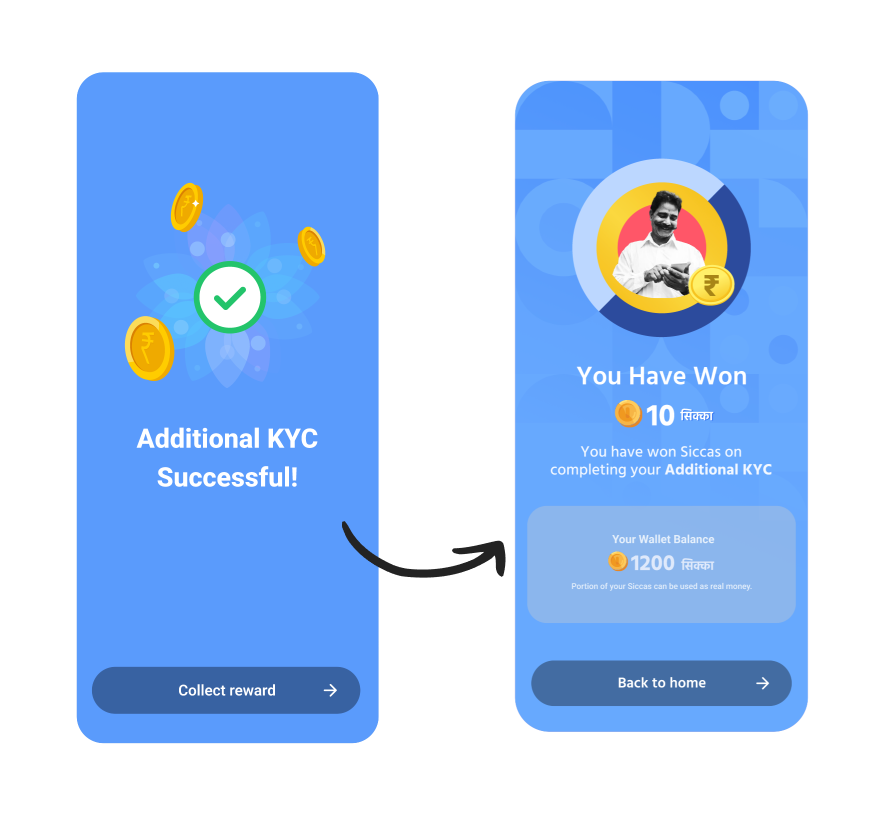
A rewards system was developed to give users a reason to return, fostering long-term app usage.

Engagement
Mini-games were introduced, providing users with incentives that kept them engaged and rewarded their interaction.
Building Trust and Engagement
I focused on building a strong connection between users and the app through relatable branding and social media, using visuals and messaging that resonated with their values and aspirations.

Social Media and Branding
While working on this project, I focused on creating a welcoming social media presence that would connect users to the app. By using relatable photos and visuals, I ensured the branding felt familiar and approachable for the Next Billion Users (NBU), reflecting their lifestyle and aspirations.

Trust Building
Building trust was essential, especially since this was a loan-based platform where users might be hesitant to engage. To overcome this, I invested time in understanding the NBU's unique concerns, fears, and motivations. This insight allowed me to create an experience that felt secure, transparent, and reliable, addressing their trust issues directly.

User Experience
The user experience was designed to be sleek yet colorful—inviting, without overwhelming. The goal was to create a visually appealing interface that felt intuitive and easy to use, ensuring NBU users wouldn't feel intimidated by the technology, but instead, feel confident navigating the app.
complex Design for
Seamless Experience
From in-depth research to crafting UI, illustrations, and animations, ensuring an intuitive and engaging platform that makes trip planning effortless and enjoyable.

Mapping traveler needs
Conducted user interviews and competitor analysis to understand common frustrations in road trip planning.

Journey-based insights
Designed a system that predicts and suggests key stop points like hotels, ATMs, and washrooms based on travel routes.

From wireframes to final UI
Created high-fidelity screens that balance clarity, aesthetics, and ease of use.

Built for smooth navigation
Focused on a layout that simplifies trip planning while maintaining flexibility for spontaneous decisions.

Bringing the app
to life
Designed custom illustrations and micro-interactions to enhance the experience.

Engaging motion design
Developed animations that make transitions feel fluid, intuitive, and fun for users.
Key features
Smart, intuitive, and visually engaging tools for effortless road trip planning

Engaging Visuals
Every design element was crafted to captivate users, making interactions feel intuitive, dynamic, and visually compelling.

Happy and Sad Paths
Designed for real-world user experiences, ensuring smooth journeys in ideal scenarios while providing thoughtful support during setbacks.

Realistic Representation
Focused on authenticity, creating designs that reflect genuine user behaviors, needs, and expectations for a truly relatable experience.
Incredible features
Balancing engagement, identity, and trust required wearing multiple hats—designing user experiences for Gen Z, building a relatable brand mascot, and crafting a fintech solution that felt both innovative and reliable. It was a process that demanded constant iteration, deep user research, and countless hours of refining every detail to create something meaningful, engaging, and truly user-centric.

Gen Z centric user flows
Designed intuitive and visually engaging user flows, tailored to the preferences and behavior of Gen Z, focusing on simplicity and interaction.

Gamification integration
Added layers of gamification to boost engagement and encourage repeat usage, ensuring a fun and rewarding experience.

Character development
Using a lemon mascot that embodied the brand’s personality, making the app feel more approachable and human.

Consistency across platform
Integrated the mascot throughout the product and marketing channels to build a consistent and recognizable identity.

Trust through design
Focused on transparency and user-friendly design to establish trust, crucial for a fintech product targeting first-time users.

Social media presence
Developed a welcoming and relatable social media strategy using visuals and messaging that reflected users' lifestyles and built engagement.
Wearing Multiple Hats: Balancing Design, Strategy, and Innovation

Designing for gen-Z

Building trust with right tools

Gamifying financial experiences

User-Centric design

Social media strategy

Evolving a fintech design system
Areas of work
At nnamu, I contributed to every aspect of the product—from search experience to user interface design. My work spanned the full spectrum of the user journey, ensuring a seamless, cohesive experience at every touchpoint.

Persona
I used a tool to generate specific user personas, helping me design with a clear audience in mind.

Eye tracking
Implemented tracking tools to ensure research-backed designs remained user-friendly and aligned with user behavior.

Psychology of design
The interface was designed with psychological principles in mind, ensuring it remained user-friendly for an older audience while guiding them to complete key tasks efficiently.

Design system
I built and implemented a new design system within three weeks to meet a tight deadline, ensuring it aligned seamlessly with front-end development.

Improved engagement
Multiple elements were introduced to boost engagement while reducing the number of clicks needed to reach a goal. The product experience is now smoother, with AI that assists rather than replaces the user.

Universal experience
We ensured a consistent experience for all users, whether they were buyers or suppliers.
The above and beyond part

Team Building
Being part of a startup, teamwork was essential, and I actively contributed to maintaining a strong team spirit. One way I did this was by designing over four different types of T-shirts for various events, including our summer party, Christmas celebration, and product launch. These designs not only added a sense of identity but also helped foster a fun and cohesive team culture.

Fun Bantering
Planned and helped in creating spaces where people could step out of their shells and connect in new ways. From a spooky and creative Halloween party to a lively and vibrant summer gathering, these events were more than just celebrations — they strengthened bonds, encouraged self-expression, and built a more collaborative, open work environment.

Public Events
I helped plan and organize nnamu’ first public event, where we publicly launched nnamu in front of a general audience. From coordinating logistics to ensuring the brand was presented effectively, I worked closely with the team to create a seamless and engaging experience that introduced nnamu to the world with impact.

Product title
Aut aliquam et at quod. Fuga atque qui. Ullam facere quibusdam. Dolorem ut id. Eum ullam laborum et. Aliquam voluptate ut.
Product title
Product information, Lorem Ipsum. Fuga atque qui. Ullam facere quibusdam. Dolorem ut id. Eum ullam laborum et. Aliquam voluptate ut.
Product title
Product information, Lorem Ipsum. Fuga atque qui. Ullam facere quibusdam. Dolorem ut id. Eum ullam laborum et. Aliquam voluptate ut.
Product title
Aut aliquam et at quod. Fuga atque qui. Ullam facere quibusdam. Dolorem ut id. Eum ullam laborum et. Aliquam voluptate ut.
Product title
Product information, Lorem Ipsum. Fuga atque qui. Ullam facere quibusdam. Dolorem ut id. Eum ullam laborum et. Aliquam voluptate ut.
Product title
Product information, Lorem Ipsum. Fuga atque qui. Ullam facere quibusdam. Dolorem ut id. Eum ullam laborum et. Aliquam voluptate ut.